Archive for the ‘Plant-based nutrition’ Category
Sunday, February 8th, 2015
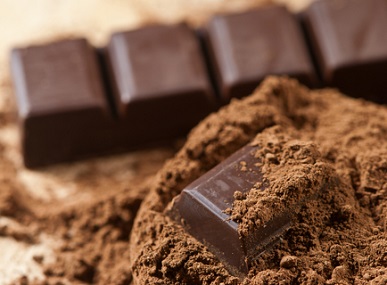
The cocoa powder is low in calories and fat but high in beneficial nutrients. The dark chocolate also has the nutrients, but is much denser in fat and calories
Seven Tips To Do It Right
Compelling scientific findings, published in peer reviewed medical journals, show significant health benefits for dark chocolate and cocoa powder. Here are the major ways that chocolate helps you avoid chronic illness.
Cardiovascular disease
Dark chocolate and cocoa powder help the inner walls of your arteries function better. As a result of this and more beneficial effects, these chocolate foods:
• Lower blood pressure
• Make blood clots less likely to form in your arteries
• Reduce the risk of (more…)
Tags: antioxidant, cacao bean, cardiovascular disease, chocolate, cocoa powder, dark chocolate, vanilla, vanilla extract
Posted in Plant-based nutrition | Comments Off on How To Make Dark Chocolate Part of a Healthy Diet
Saturday, January 24th, 2015
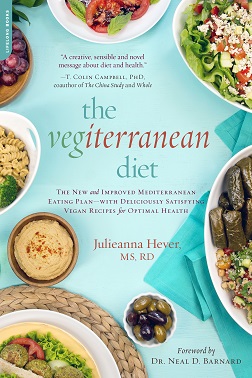
The Vegiterranean Diet takes Mediterranean to wonderful heights of flavor and health
Julieanna Hever Delivers a Delicious Journey To Blue Waters and Health-Enhancing Foods
Julieanna Hever, the plant-based dietitian, takes the Mediterranean diet to its highest level of taste and health in her book The Vegiterranean Diet. She gives you several books wrapped into one: a Mediterranean diet history, a colorful travelogue, an overview of required nutrients and how to get them, a guide to stocking your kitchen and making healthy cooking more convenient, and more than sixty extraordinary Vegiterranean recipes. The book is entertaining, informative, and compelling, with unexpected discoveries in every chapter.
Julieanna clarifies how the Mediterranean diet has changed since early research in Crete, when only 7% of calories came from animal products. Today, however, many have come to see this diet as reliant on fish, olive oil, cheese, and wine. This way of eating, as it is currently thought of, has been found to be an improvement on a standard American diet built on such staples as hot dogs, fries, and donuts. However, a comparison to the health-wrecking standard American diet is a low bar to pass.
Starting from the fact that the original Mediterranean diet was a whole foods, plant-based way of eating, Julieanna gives clear guidance on (more…)
Tags: Julieanna Hever, Mediterranean Diet, olive oil, olives, The Vegiterranean Diet, whole foods plant-based diet, whole foods plant-based recipes
Posted in Plant-based nutrition | Comments Off on How the Vegiterranean Diet Transforms the Mediterranean Diet
Sunday, December 21st, 2014

With the right demolition equipment, you can knock down a large building. And with the real facts, you can shatter commonplace nutrition myths that make you sick
These Eye-Opening Articles Demolish Dangerous Nutrition Myths
When I began researching meatless eating in 1995, I thought I was knowledgeable about nutrition. After all, everything I had been told from middle school on, whether from teachers, doctors, or the media, agreed that animal foods were necessary for good health. Meat was the center of my lunches and dinners.
My two daughters, then ages 11 and 13, had just declared they would not eat meat. Fooled by (more…)
Tags: Center for Biological Diversity, dangerous nutrition myths, Dr. Milton Mills, fish dangers, most surprising myths of 2014, Perfect Formula Diet, poultry dangers, whole foods plant-based diet
Posted in Plant-based nutrition | Comments Off on My Three Most Surprising Blogs of 2014
Sunday, December 14th, 2014

The vanilla flower is a gorgeous orchid, shown with the dried seed pods used for pure, natural vanilla spice
This Enticing, Aromatic Spice Protects Your Health In Five Ways
Vanilla has an image problem. The run-of-the-mill perception is that vanilla is a plain and boring choice. Once you learn about this extraordinary spice, your appreciation may change. In fact, vanilla is a rare, expensive, and health-enhancing flavor.
Vanilla is produced from the seeds of a tropical climbing orchid that grows as a vine. Native to Mexico, vanilla was used by the Aztecs in the chocolate drink of their royalty. The bees and hummingbirds that pollinate this orchid (more…)
Tags: antioxidants, cancer, chocolate, healthy desserts, inflammation, nutrition facts, Perfect Formula Diet, Plant-based nutrition, spice, vanilla, vanilla extract, vanilla powder, whole foods plant-based diet, whole foods plant-based recipes
Posted in Plant-based nutrition | Comments Off on Vanilla Is Anything But Plain
Saturday, July 19th, 2014

Carnivorous plants are so strange that they can trigger fear. But person-eating plants are the stuff of low-budget science fiction, not reality
Why Do Some Plants Consume Insects?
Here’s a situation I’ve run into many times. Me giving a presentation: “Plants are the base of the food chain on planet earth. Do plants eat animals, or do animals eat plants?”
Someone in audience: “What about the plants that eat insects?”
Okay, let’s figure out this question. What about these carnivorous plants? Do they upset the foundation of the food chain idea? And what lesson do they hold on whether you should eat meat?
SURPRISING FACTS ON CARNIVOROUS PLANTS
Plants need both energy and nutrients to survive and grow. All plants, carnivorous or not, get their energy from the sun. Using the process of photosynthesis in leaves, they convert sunlight into energy that is stored in chemical bonds. This energy is used both by plants for their own processes and by animals (which cannot directly harvest sunlight for energy and must rely on plants, either directly or indirectly).
Nutrients needed to build plant cells are mainly (more…)
Tags: amino acid, carnivorous plant, insect eating plant, pitcher plant, protein, Venus flytrap, whole foods, whole foods plant-based diet
Posted in Plant-based nutrition | Comments Off on Carnivorous Plants Can Tell You What to Eat
Friday, June 13th, 2014
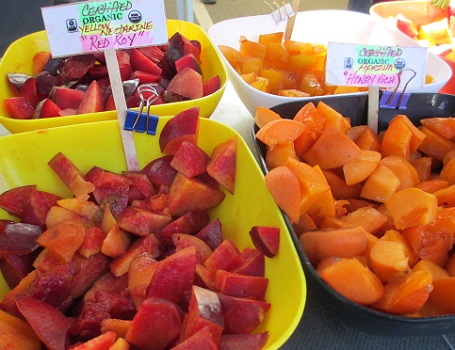
Fruit sampling is a farmers market favorite for kids and their parents as well
Fears of Fruit Flood Ill-Informed Diets
Controversy swirls around the question of whether people who are overweight should eat fruit. On the one hand, this food is regarded as the embodiment of health, unprocessed and rich in vitamins, antioxidants, fiber, and other beneficial substances. But then there is the myth that (more…)
Tags: antioxidants, fruit, fruit and weight loss, fruit salad, lose weight, nutrition facts, Perfect Formula Diet, Plant-based nutrition, summer fruits, weight loss, whole foods plant-based diet
Posted in Plant-based nutrition | Comments Off on Will Fruit Make You Fat?
Sunday, June 1st, 2014
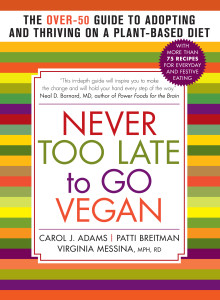
Never Too Late To Go Vegan is an inspiring book with an inspired title
A Truer Book Title Has Not Been Written
The over-50 crowd now has their own book on ditching animal foods. Never Too Late to Go Vegan is a comprehensive guide to adopting and staying on a plant-based diet for this age group.
The book covers all the “whys” of making this change, as well as what to eat, how to cook it, and how to stay the course while dealing with some social and logistical challenges that vegans may run into. Lists of tips cover everything from how to make the transition to a plant-based diet to taming stress to places to learn more. Stories from the three coauthors, Patti Breitman, Carol Adams, and Ginny Messina, bring the lessons alive, as do many other entertaining and inspiring stories from others who went vegan in the second half of life.
I was happy to have a chance to talk with Patti Breitman, who is now a neighbor. Coincidentally, when I lived in Marin County in the 1990s, I regularly attended potlucks held by Patti’s organization Marin Vegetarian Education Group. These gatherings were an important force leading to my own (more…)
Tags: Carol Adams, getting healthy, Ginny Messina, lose weight, making a difference now, Never Too Late to Go Vegan, Patti Breitman, Plant-based nutrition, vegetables, whole foods plant-based diet
Posted in Plant-based nutrition | Comments Off on Never Too Late to Go Vegan
Sunday, August 18th, 2013
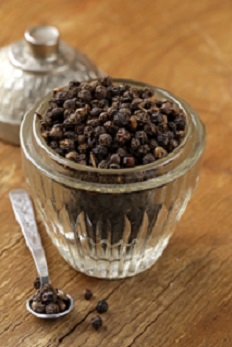
Black pepper is an inexpensive, common spice with a long list of health benefits
Black Pepper Sprinkles Unexpected Health Benefits and Pungent Taste
Sometimes you seek health by expensive, exotic means; you may fail to see the benefits right in front of you in everyday, low cost foods that you take for granted. Such is the case with black pepper.
This common spice has long been a personal favorite. I rarely eat lunch or dinner without enjoying the mildly spicy, distinct taste and enticing aroma of freshly ground black pepper. Finally, I stopped and asked myself “What are the benefits of this food I eat multiple times a day?,” heading to medical journals to see who else had asked this question and what they found out.
Black pepper, called “the king of spices,” is one of the most popular seasonings in countries around the world. The peppercorns are dried fruits of a tropical vine that will not grow in more temperate climates. People have prized black pepper for thousands of years, giving it a prominent role in traditional medicine and trade as well as in cooking. For example, traditional healers used black pepper to aid digestion, soothe stomach problems, and treat sore throat, colds, asthma, itching, pain, and breathing and heart problems.
HEALTH BENEFITS OF BLACK PEPPER
Recent research validates powerful health benefits of this everyday spice. While black pepper contains (more…)
Tags: antioxidant, antioxidants, black pepper, cancer, cardiovascular disease, getting healthy, king of spices, nutrition facts, Perfect Formula Diet, piperine, Plant-based nutrition, spice, whole foods
Posted in Plant-based nutrition | Comments Off on Five Reasons to Make Black Pepper a Favorite Spice
Sunday, July 28th, 2013

Just as small patches of snow melt in spring, chronic illness can vanish with a whole foods, plant-based diet
Doctors Terry Mason and Baxter Montgomery Are Bright Hopes in a Failing Health Care System
The June 23, 2013 conference Healthy Taste of the South Bay, gave two top physicians the chance to share compelling visions for transforming the health of thousands of ill patients, not to mention the model that the medical system uses to approach chronic disease.
DR. MASON’S VISION
Dr. Terry Mason, CEO of the Cook County Health and Hospitals System, leads the third largest public healthcare system in the country. He is also a practicing urologist and one of the clinical stars of the documentary Forks Over Knives.
Dr. Mason’s vision is the Center for Total Health at Oak Forest, which would be a multipurpose health center using an evidence-based wellness-care delivery system to treat chronic illness and bring health to an underserved population. The physical foundation of his vision is (more…)
Tags: cardiovascular disease, Center for Total Health at Oak Forest, diabetes, Dr. Baxter Montgomery, Dr. Terry Mason, Forks Over Knives, Healthy Taste of the South Bay, Montgomery Heart and Wellness Center, nutrition facts, Plant-based nutrition, Texas Medical Center, vegetables, whole foods plant-based diet
Posted in Plant-based nutrition | Comments Off on Plant-Based Doctors Build On Powerful Visions
Tuesday, May 21st, 2013
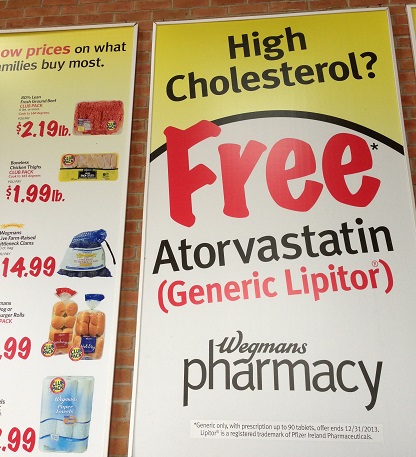
This ironic sign embodies the reductionist world view. This supermarket is giving away free Lipitor, and advertising this bounty on a sign right next to a promotion for a sale on meat, chicken, and processed junk food. Yet no one realizes the connection between the two signs
Why Whole Is the Must-Read Nutrition Book of Our Century
If you read only one book for the entire rest of your life, Whole: Rethinking the Science of Nutrition, should be it. T Colin Campbell, PhD, the book’s pioneering author, shatters the current ways of thinking about nutrition with a compelling blueprint for a revolutionary alternative.
Here are three reasons to put aside whatever else you are working on, go out or online and get hold of Whole now, and read this groundbreaking work.
WHOLE WILL TRANSFORM YOUR UNDERSTANDING OF NUTRITION
At its core, Whole aims to revolutionize your understanding of (more…)
Tags: Forks Over Knives, getting healthy, making a difference now, nutrition facts, Plant-based nutrition, reductionism, T. Colin Campbell, Whole, whole foods plant-based diet, wholism
Posted in Plant-based nutrition, Uncategorized | Comments Off on Three Reasons To Read Whole Now